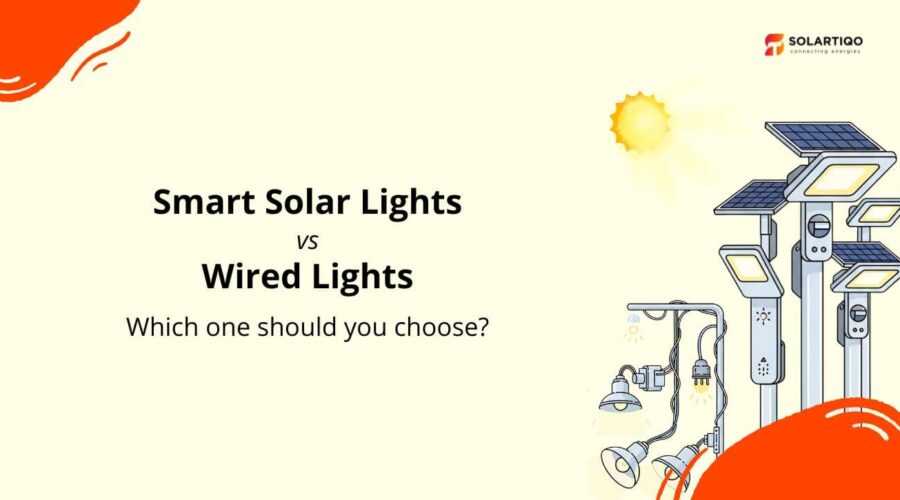
Smart Solar Lights vs. Wired Lights: Which Is Best for You?
Outdoor lighting is much more than just aesthetics.
Lighting plays a crucial role in keeping communities safe, improving urban infrastructure, and facilitating traffic flow. However, with rising energy costs, consistent demands for maintaining the same, and ever-increasing environmental concerns, cities are considering installing an energy-efficient alternative. Not just municipalities, but citizens too are seen switching over to solar powered outdoor lights.
Solar-powered lights are quickly becoming the most sustainable alternative when compared to traditional wired outdoor lighting. These sustainable outdoor lights stand out in the space, offering high-performance, reliable lighting that is built to last and is also budget-friendly.
In this guide, we’ll break down the key differences between the solar powered outdoor lights and wired outdoor lighting – comparing the lifespan, cost, maintenance, and environmental impact, so that you can choose the best alternative for your project.
Breaking Down The Key Differences – Soar Outdoor Lights and Wired Outdoor Lights
| Feature | Solar-powered Outdoor Lights | Wired Outdoor Lighting |
|---|---|---|
| Installation | DIY options are available. Easy and quick, and no cabling required. (Ideal for solar motion sensor light outdoor setups) | Time-consuming and needs professional wiring |
| Maintenance | Battery replacement may be necessary every few years. | Needs electrical inspections and bulb replacements |
| Motion Sensor Integration | Typical of motion sensor outdoor light models that run on solar power | Less frequent; requires more integration of sensors |
| Placement Flexibility | Placed anywhere with sunlight exposure | Limited by power accessibility and power outlet |
| Aesthetic Appeal | Clean look, sleek wireless designs, great for outdoor solar motion sensor light outdoor | Wide variety of LED wired outdoor lighting options |
| Lifespan | For battery-based systems, two to five years | 5–10+ years with a reliable wiring configuration |
| Eco-Friendliness | 100% renewable energy | Not always green |
| Cost | Low setup cost and long-term savings | Expensive fixtures, as well as the cost of an electrician |
Wired Outdoor Lighting Can Cost 3X More Than Solar — Know the Real Difference
When designing your outdoor lighting setup, cost is the primary factor in decision-making. Both wired and solar-powered outdoor lighting options come with initial and recurring costs.
Here’s how they compare in terms of saving your money and the environment.
Hidden Costs of Wired Outdoor Lighting
Wired systems often come with a lot of strings — or wires, literally.
- Installation is not the aspect; there are other considerations as well. Your outdoor wire lights will require trenching, cabling, and often the services of an electrician to ensure everything is safely installed.
- Every month, you may witness the rising amount of energy use. Even the most efficient fixtures still draw power from your electricity supply.
- Repairs? A single bad connection may require costly repairs.
How Solar Quietly Saves You More
Outdoor lights that run on solar power keep things easy and affordable.
- Don’t trench. No wiring. Simply place them in a sunny spot.
- A solar motion sensor light outside is an example of a wise choice that saves energy and wear by only turning on when necessary.
- No electricity costs. No unexpected upkeep.
Solar-powered outdoor lights are hassle-free and have no hidden wires, making them a simple, economical, and efficient choice.
Where to Go Solar—and Where to Stay Wired
Not every outdoor area is the same. Solar is the hero sometimes. In other situations, wired is still effective. Here’s how to determine what works in which situations:
Go Solar When:
- You need a simple, hassle-free lighting for your driveways, walkways, and gardens.
- Throughout the day, the space gets ample sunlight.
- For added security, consider installing motion-activated lighting, such as an outdoor solar-powered motion sensor light.
- You’re staying away from trenches, cables, and hiring an electrician.
- You’re lighting up isolated areas where wiring isn’t feasible.
Stay Wired When:
- Where there is little to no sunlight in the area (such as in areas with lots of trees or shade).
- Places where you need continuous, high-intensity lighting throughout the night
- Spaces where you need to illuminate expansive areas, such as business driveways or sports fields.
- You can access the wired infrastructure you already have.
Insightful Tip: Combine and contrast! For flexibility, use solar motion sensor lights outdoors; for areas that require full brightness and consistency, use wired lights.
A Hybrid Approach: Using Both Solar and Wired Lights Wisely
There is more than one alternative when it comes to outdoor lighting. The most intelligent configurations frequently combine wired and solar-powered outdoor lighting to strike a balance between reliability and efficiency.
Why Go Hybrid?
Combining both lighting systems allows you to match the right light to the correct zone:
- Use solar powered motion sensor outdoor lights for pathways, garden borders, entrances, and areas with good sunlight. They’re energy-free, motion-activated, and easy to install, making them ideal for everyday use and low-traffic areas.
- Reserve wired outdoor lighting for high-traffic areas, such as patios, driveways, backyards, or any other location that requires consistent, high-lumen brightness, regardless of the weather conditions.
Smart Zones, Smarter Savings
This hybrid strategy gives you:
- Flexibility – It gives you the flexibility to light only what you need.
- Reliability – With wired lights, you enjoy uninterrupted lighting in critical zones.
- Efficiency – Solar motion sensor lights for outdoors are budget-friendly and come with a good lifespan with minimal maintenance.
- Long-Term Value – You get the best of both worlds, i.e., durability, cost control, and eco-conscious design.
Pro Tip: Think of solar as your “set-and-forget” lighting and wired as your “always-on backup.” Together, they cover all your lighting needs without compromise. Learn about solar incentives that can lower your upgrade costs.
Final Thoughts: Making the Right Choice for Your Project
There is no one-size-fits-all rule in here. Solar-powered outdoor lights, especially those equipped with motion sensors, are a popular choice these days. Mainly if your outdoor areas, such as a garden or backyard, receive ample sunlight and you are looking for something easy on your pocket and low-maintenance. They simply have a longer lifespan and are easy to set up.
On the other hand, wired outdoor lighting is still the preferred option. They are helpful for larger areas, shaded places, or areas where you want consistent, bright lighting throughout the night, like patios, garages, or walkways.
Not sure which one to choose? Go hybrid. Where reliability is most important, opt for a wired solution and utilize solar power where the sun shines. It all comes down to determining what suits your outdoor lifestyle, space, and budget.
Balance is key to an ideal lighting arrangement, not just the selection of light bulbs.
Frequently Asked Questions
Can solar lights work during monsoons or in low sunlight?
Yes, but with some limitations. Solar-powered outdoor lights can still charge on cloudy days, just more slowly. Most good models store enough backup power to keep going through a few gloomy evenings, but expect slightly dimmer or shorter run times during extended monsoon spells.
Will installing wired lights significantly increase my electricity bill?
They can, especially if you’re lighting up large areas every night. Unlike solar motion sensor lights for outdoor use that operate on sunlight, wired outdoor lighting requires a constant power source. Even with LED bulbs, the cost adds up over time.
Can I install outdoor lights myself?
If you’re going solar! Most solar powered motion sensor outdoor lights are plug-and-play, with no wiring, no tools, just sunshine. Wired lights, on the other hand, often require professional assistance to be installed safely and correctly.
Are motion sensor lights reliable for security?
A well-placed solar motion sensor light outdoors can instantly spotlight unexpected movement — whether it’s a visitor or something less welcome. They’re energy-efficient, low-maintenance, and surprisingly effective at catching attention when it matters most.